

The EC Technique in CPR: Why a Proper Mask Seal Still Saves Lives
Posted by Sydney Pulse, APRN at 9:05 am 0 Comment Print
Cardiac arrest can strike anyone, anywhere, at any time. Most bystanders remember to call 911. Most remember to push hard on the chest. Far fewer remember how to seal a rescue mask correctly. That single skill, known as the EC technique in CPR, often decides whether rescue breaths ever reach the lungs.
This guide explains what the EC technique is and why it still matters under the 2025 AHA Guidelines. It also shows how hands-on CPR certification training builds real confidence with it.
What Is the EC Technique in CPR?
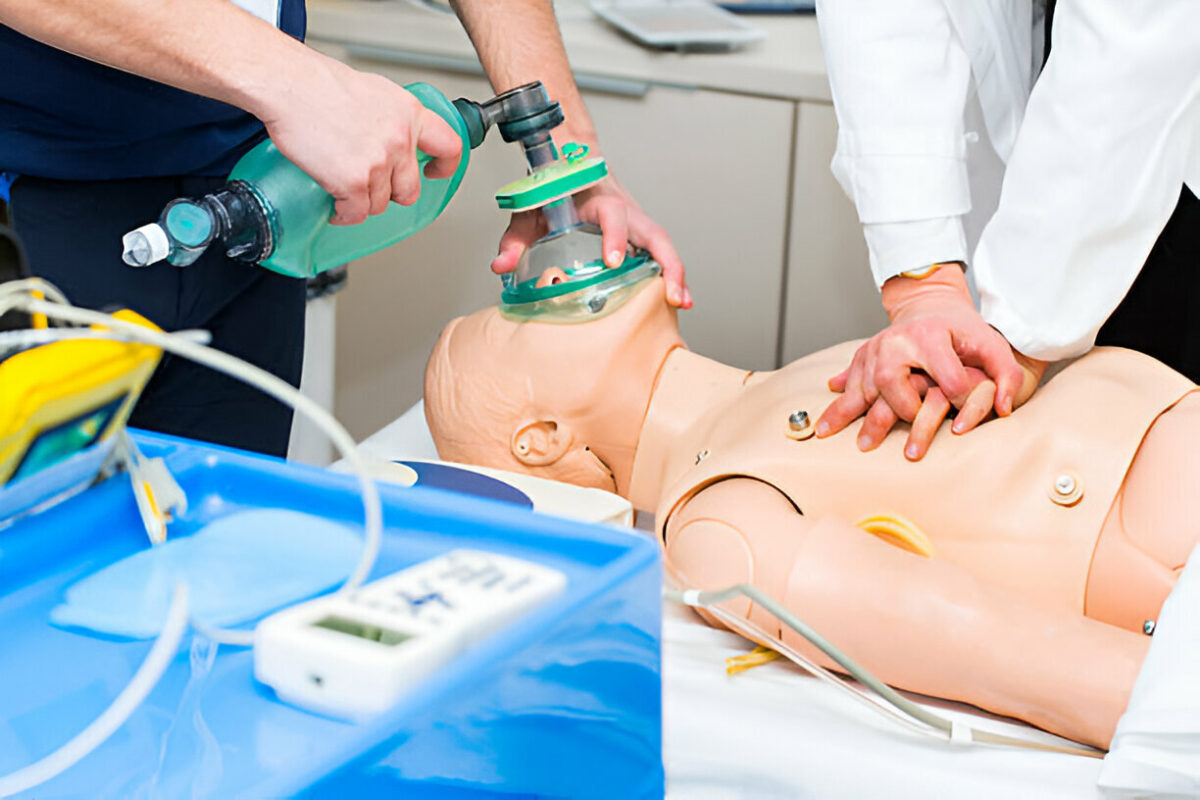
The EC technique, sometimes called the E-C clamp, helps a single rescuer hold a face mask tightly against a patient’s face. The thumb and index finger form the letter “C” around the top of the mask. They press down gently to create a seal. The remaining three fingers form the letter “E” along the jawline. Those fingers lift the jaw into the mask instead of pushing the mask down onto the face.
This grip does two jobs at once. First, it forms an airtight seal around the nose and mouth. Second, it lifts the jaw and opens the airway, much like a head-tilt chin-lift maneuver. Skip either part, and air escapes before it ever reaches the lungs.
Why Mask Seal Quality Matters So Much
Bag-mask ventilation only works when air actually enters the lungs. A poor seal remains one of the most common reasons rescue breaths fail during CPR, even when a rescuer squeezes the bag correctly.
The stakes are high nationwide. According to the 2025 CARES National Registry Annual Report, only 42.5% of out-of-hospital cardiac arrest patients received bystander CPR last year. Overall survival to hospital discharge stood at just 10.5%. Every skill that improves ventilation quality, including a proper mask seal, helps push that number higher.
Local incidents show why this training matters close to home. In January 2026, Hillsborough County deputies and a bystander performed CPR on a four-year-old boy found unresponsive on Interstate 275. He reached St. Joseph’s Hospital in stable condition. Fast, correctly performed CPR made that outcome possible. Tampa General Hospital and BayCare facilities across the region see these cases firsthand. That is exactly why so many local nurses, EMTs, and clinic staff keep their BLS certification Tampa cards current.
What the 2025 AHA Guidelines Say
The 2025 AHA Guidelines for CPR and ECC now favor a two-handed mask seal whenever two rescuers are on scene. One rescuer uses both hands to seal the mask and lift the jaw, while a second rescuer squeezes the bag. This method delivers a larger tidal volume and fewer air leaks than the traditional one-handed EC technique.
Still, most bystander CPR starts with only one person on scene. That reality keeps the EC technique central to Heartsaver, BLS for Healthcare Providers, and other AHA courses, including every class taught at CPR Tampa.
How to Perform the EC Technique, Step by Step
Follow these steps to build a reliable mask seal:
- Kneel at the top of the patient’s head.
- Choose a mask that covers from the bridge of the nose to the cleft of the chin.
- Form a “C” shape with your thumb and index finger over the mask.
- Place your remaining three fingers along the bony ridge of the jaw to form an “E.”
- Lift the jaw into the mask. Never press the mask down onto the face.
- Tilt the head back gently to open the airway, unless you suspect trauma.
- Give each breath over one second. Watch for visible chest rise.
Common Mistakes That Break the Seal
Many rescuers press hard on the mask instead of lifting the jaw. That pressure pushes soft tissue into the airway and blocks airflow. Others rest their fingers on the soft tissue under the chin, which causes the same problem. Correct hand placement stays on the bony part of the jaw, never on the throat.
Rescuers should also check the entire mask rim for leaks, not just the center. One small gap can drain away most of the air in a breath. Additionally, mask size matters. A mask that is too large or too small makes a tight seal nearly impossible, no matter how good your hand position is.
Who Needs This Skill
Nurses, EMTs, teachers, coaches, lifeguards, and daycare staff all rely on this skill. So do parents and caregivers who simply want to feel prepared. Many Tampa employers now require proof of current BLS certification for healthcare roles. Local hospital systems increasingly expect hands-on, in-person renewal, not an online-only card.
Why Hands-On Practice Beats Reading Alone
Reading about the EC technique cannot replace practicing it under pressure. Muscle memory forms through repetition on a manikin, guided by real-time feedback from a certified instructor. Every BLS for Healthcare Providers, ACLS, PALS, and CPR and First Aid class at CPR Tampa builds that muscle memory through hands-on drills, not lecture slides.
CPR Tampa is an American Heart Association training site offering initial certification and renewal for these courses. Classes stay small, stress-free, and fully hands-on from start to finish. The EC technique becomes second nature long before you ever need it in a real emergency.
Take the Next Step
The EC technique in CPR looks simple on paper. Performing it correctly under real pressure takes guided, hands-on practice, not a video or a PDF. Whether you need a first-time card or a renewal, local AHA-authorized training makes the real difference.
Sign up for CPR certification in Tampa to learn hands-on airway skills like the EC technique from certified instructors. Already certified and due for a refresher? Register for BLS certification in Tampa to keep your mask-seal and ventilation skills sharp and current.

